01
Introduction
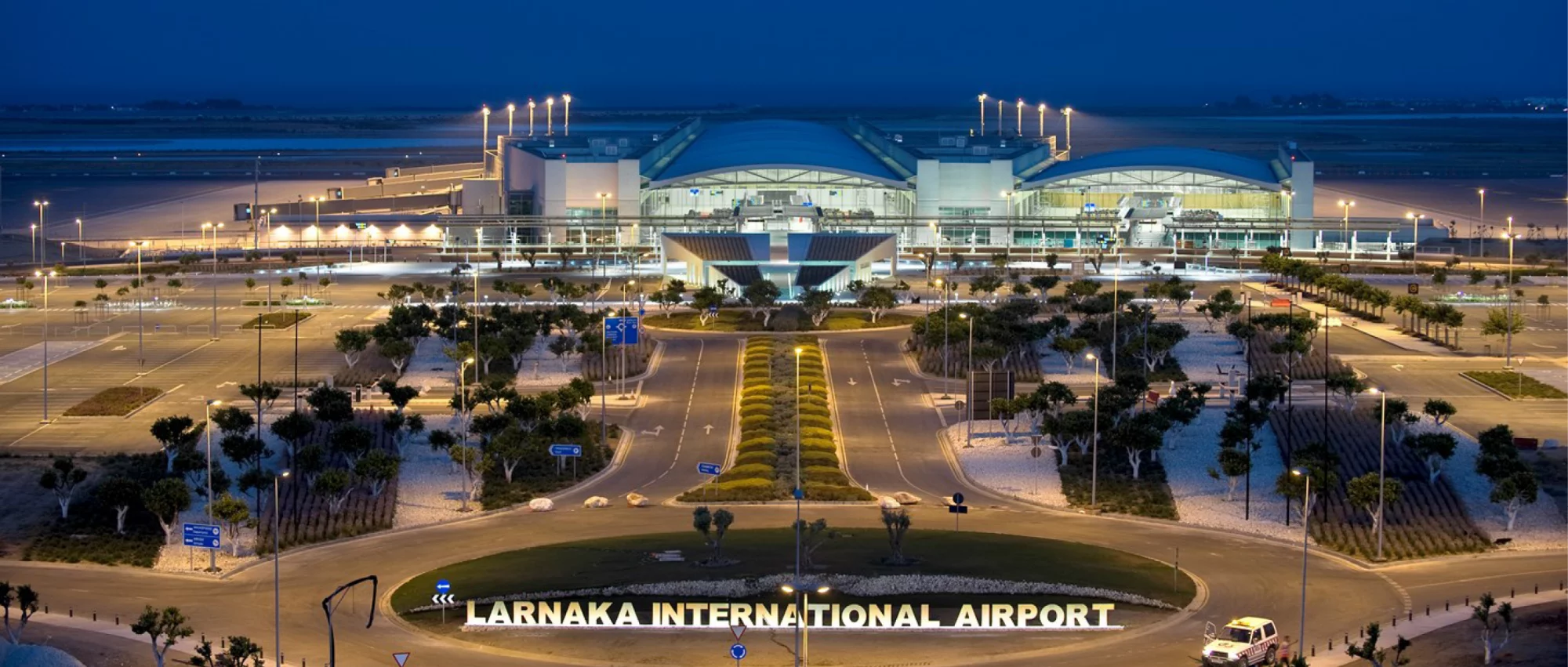
Hermes Airports operates Cyprus’ two major aviation hubs—Larnaka (LCA) and Pafos (PFO)—serving as key gateways connecting Europe and the Middle East. In 2024, these airports managed 12.2 million passengers, marking a 5.6% year-over-year growth across 159 routes. Their goal was clear: modernize the passenger journey by digitizing parking, lounge, and fast track bookings into a seamless, intuitive experience.
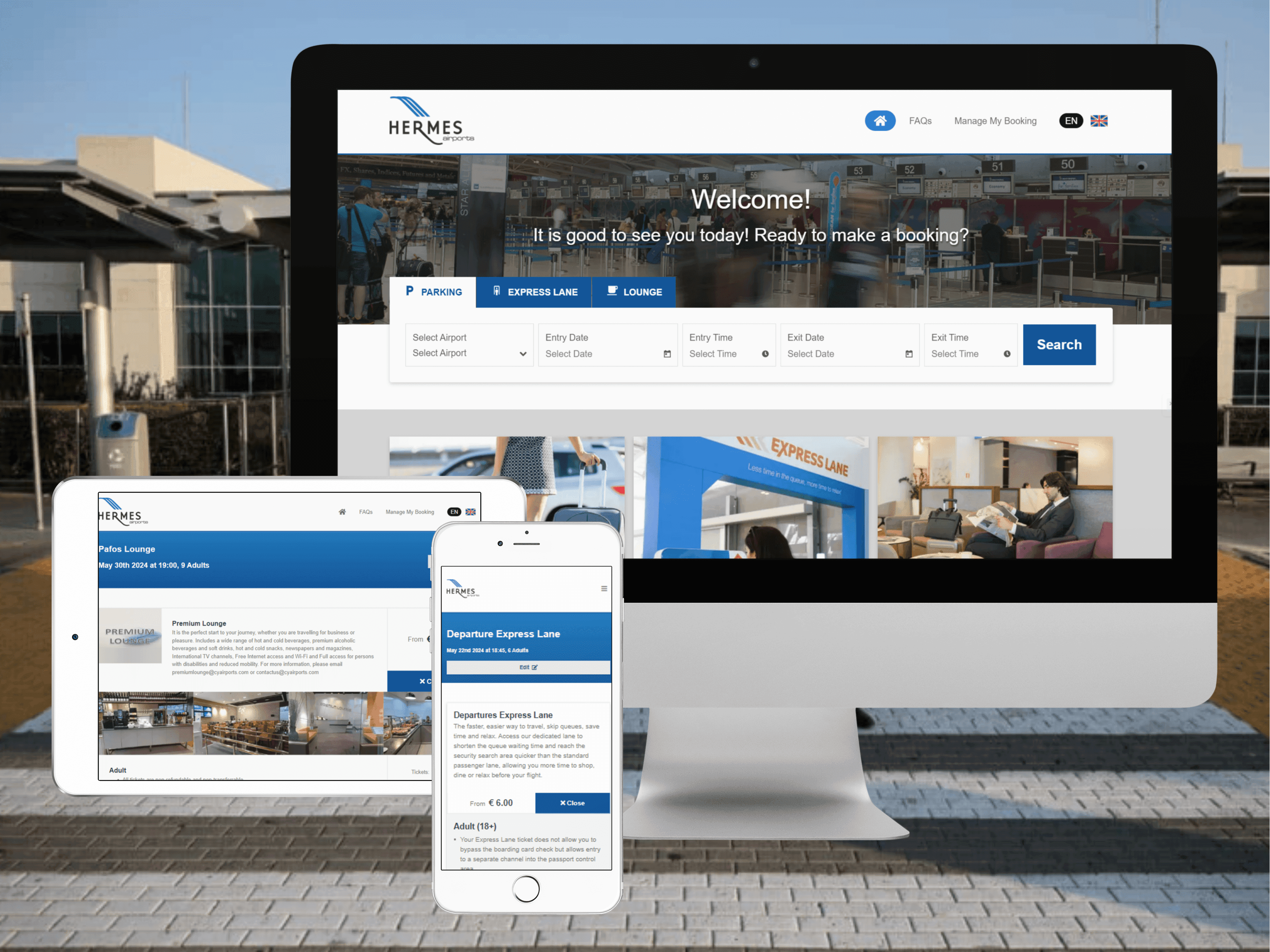
To capitalize on this growth and modernize the passenger experience, Hermes partnered with Rezcomm to deploy a scalable B2B2C SaaS Marketplace. The strategic objective was to transition from fragmented, legacy booking systems into a centralized, data-driven e-commerce platform for parking, lounges, and fast-track services.
02
CHALLENGES
Through heuristic evaluations and stakeholder workshops, we uncovered a clear disconnect between the system's architecture and the users' mental models. The legacy experience was highly fragmented, creating UX friction that directly hurt conversion and revenue.
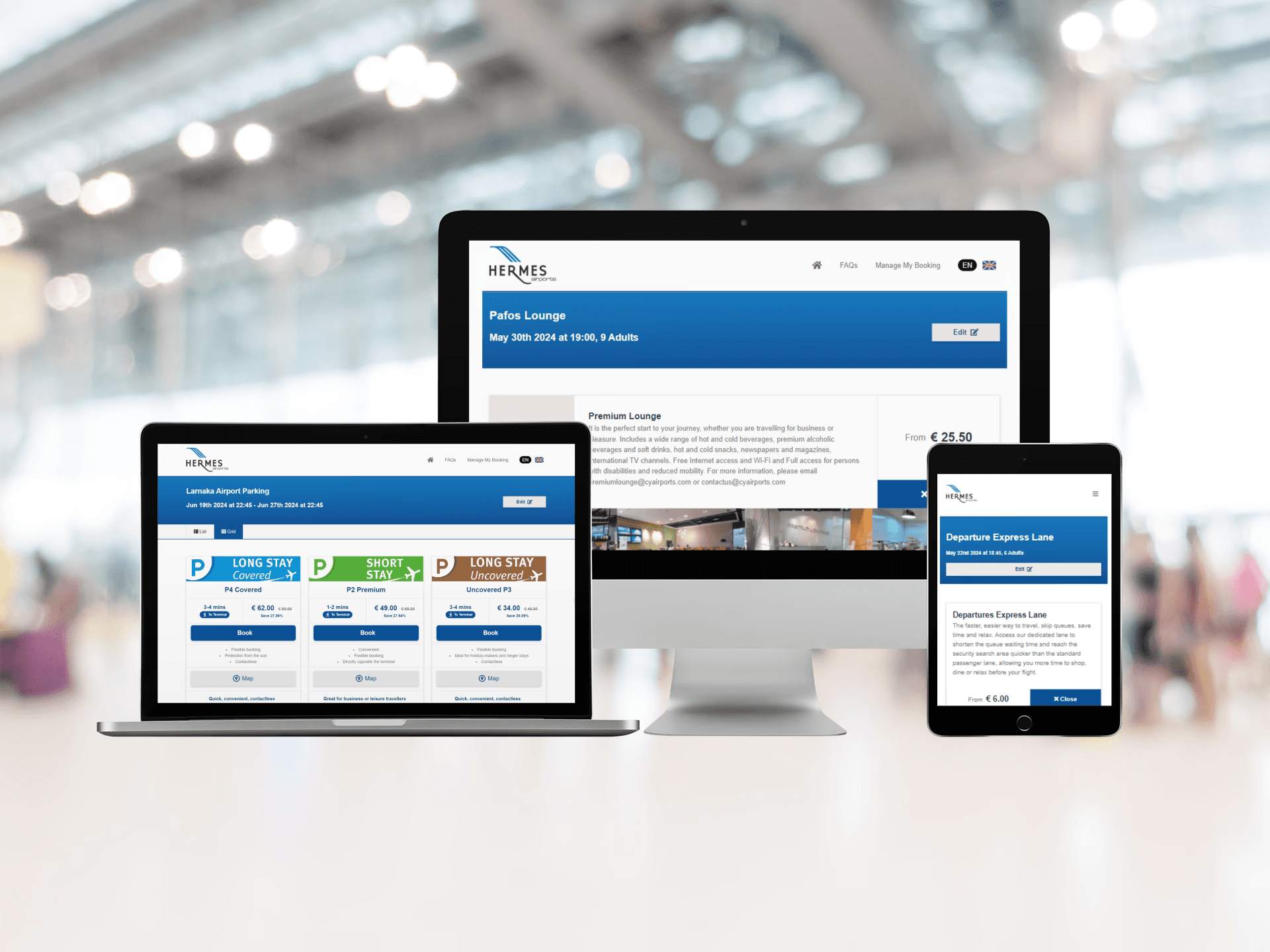
The previous experience was fragmented—each service (parking, lounge, fast track) lived in its own system, causing confusion and unnecessary effort for passengers. Users didn’t know where to book, what was included, or how long it would take.
Key Frictions & Business Risks Identified:
High Cognitive Overload & Drop-offs: Airport services (parking, security fast-track, VIP lounges) existed in separate domains. This disjointed architecture resulted in high interaction costs and severe cart abandonment.
Missed Revenue Opportunities: The lack of a centralized e-commerce engine prevented algorithmic cross-selling. The business could not offer contextual bundles (e.g., offering Fast Track to a Premium Parking customer).
Operational Blind Spots: Hermes' internal teams lacked unified dashboards. The absence of real-time Business Intelligence (BI) hindered dynamic pricing and capacity management.
These insights guided the redesign toward simplicity, speed, and consistency.

03
SUMMARY
To build a case for a unified platform, I led a generative and evaluative research phase, translating qualitative user pain points into actionable business strategies to secure stakeholder buy-in.
1. Contextual Inquiry & Synthesis: Conducted on-site observations and interviews with diverse cohorts (frequent business flyers vs. leisure travelers) at Larnaka and Pafos terminals. We mapped user interactions during high-stress scenarios (e.g., navigating terminal parking under time constraints).
2. Influencing Business Decisions: Our research revealed that users craved a "one-stop-shop" with absolute price transparency. I utilized these insights to successfully advocate to the executive team that investing in a unified cart architecture was not just a UX improvement, but a critical revenue driver capable of significantly increasing Average Order Value (AOV).
04
DESIGN APPROACH
Discovery Phase
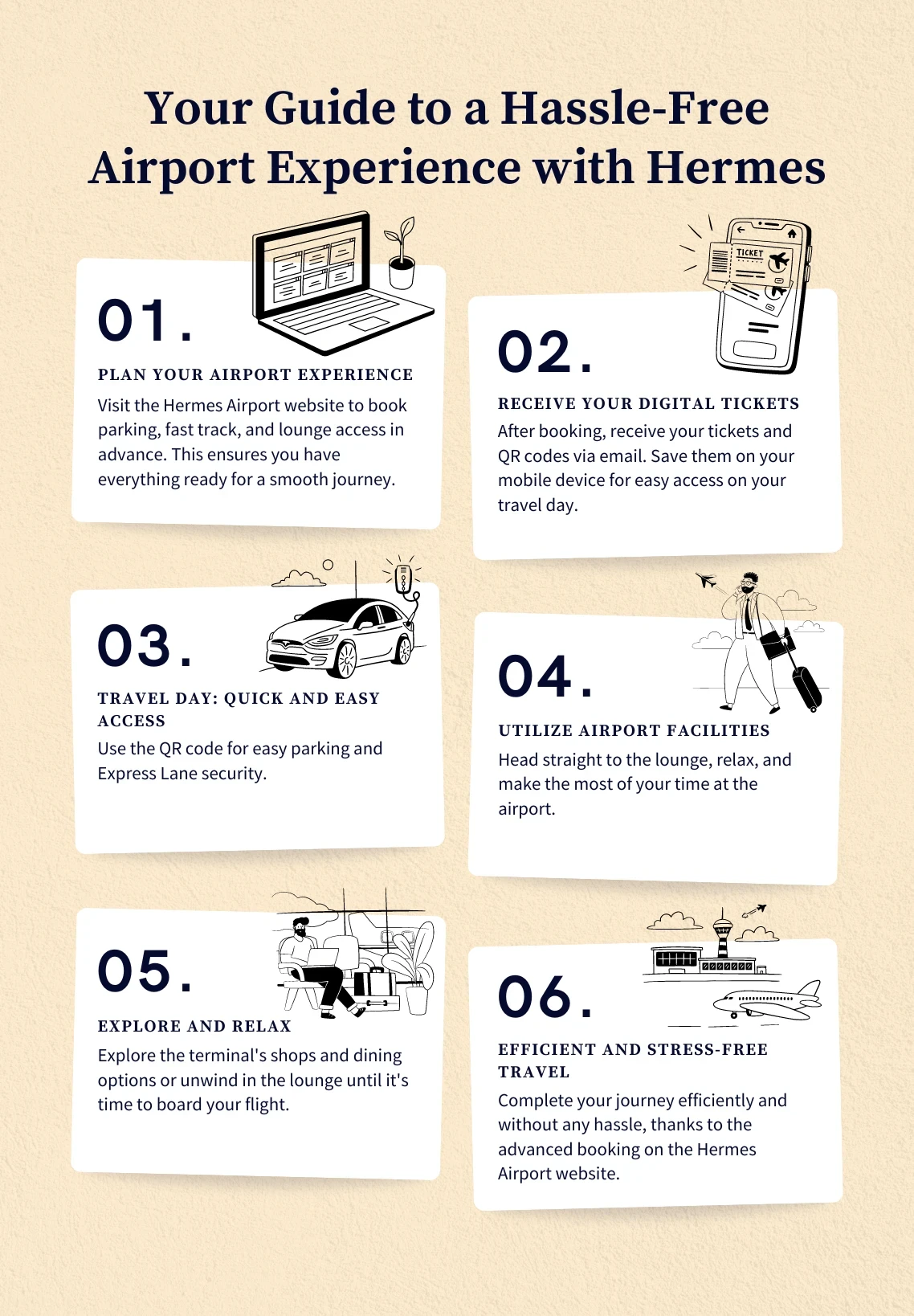
Understanding that the airport experience spans digital and physical spaces, I mapped a holistic Service Blueprint, ensuring frontend UX aligned with backend operations and day-of-travel realities.
User Journey
Phase 1: Discovery (Pre-Booking)
Strategy: Leveraged Rezcomm’s CRM integration to design targeted landing pages.
Outcome: Personalized bundle offers based on user segmentation (e.g., "Family Holiday" vs. "Business Express").
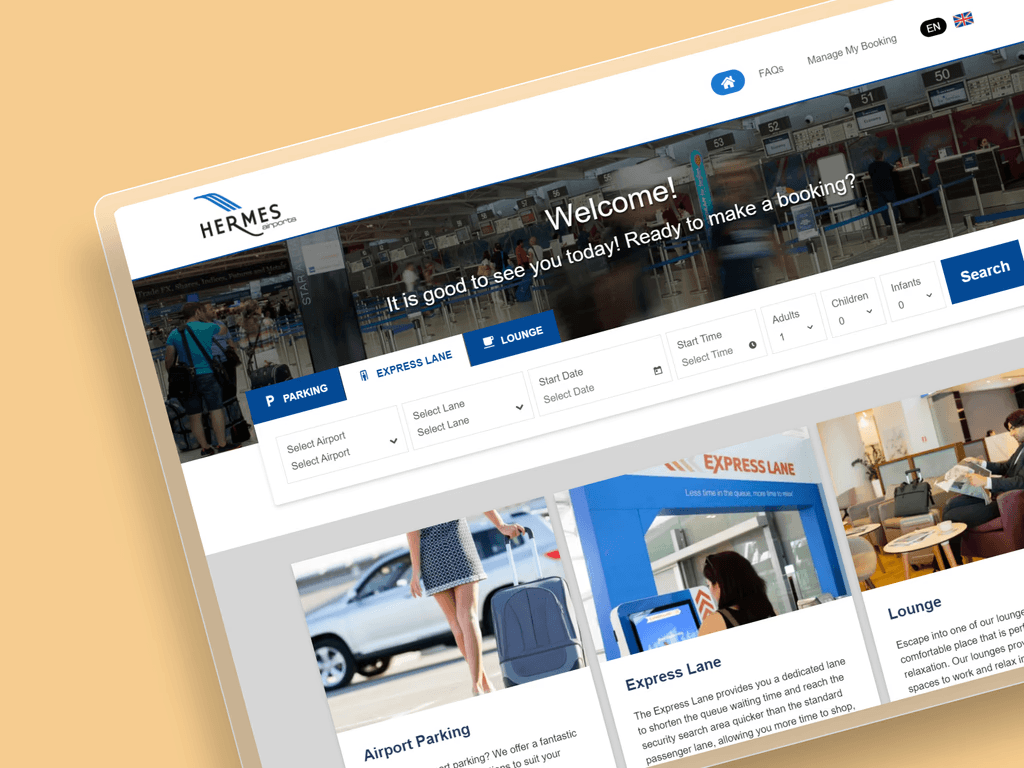
Phase 2: E-Commerce Conversion (The SaaS Marketplace)
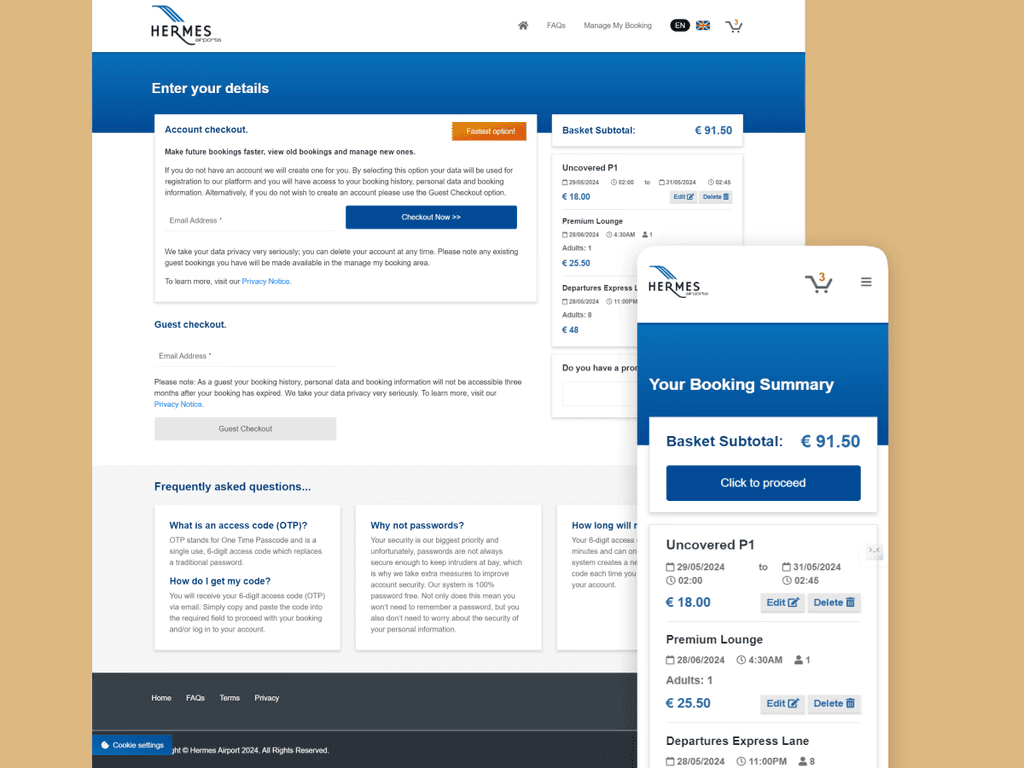
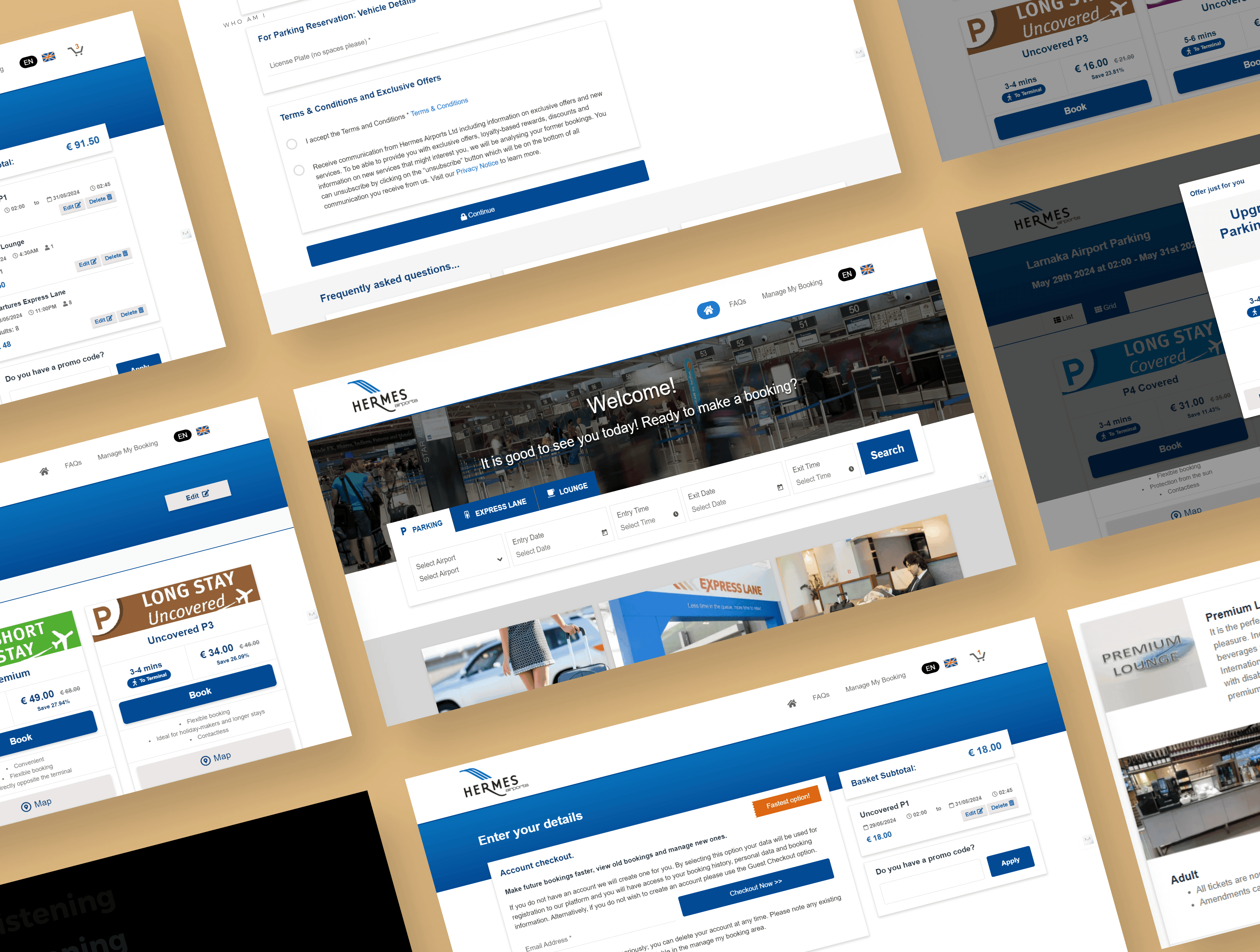
Strategy: Designed a seamless, single-page progressive checkout.
Outcome: Minimized decision fatigue and seamlessly integrated "Smart Bundling" modules to cross-sell seamlessly.
Phase 3: Fulfillment (Day of Travel)
Strategy: Bridged the digital-to-physical gap.
Outcome: Designed scannable, high-contrast digital QR tickets optimized for mobile wallets, enabling touchless entry at legacy parking barriers and security gates.
05
DESIGN PROCESS
Objectives
Build a unified booking experience
Reduce steps and minimize wait time
Provide real-time availability and confirmations
Improve operational efficiency for airport teams
Cross-Functional Collaboration & Engineering Handoff
Designing for an airport environment meant navigating strict technical constraints, legacy APIs, and stringent security requirements. My collaboration with the dev team was crucial to ensuring design fidelity and system scalability.
I worked closely with:
Project Manager — timelines & coordination
Director of Communications — brand alignment
Product Manager — requirements & user stories
Developers — technical implementation
The Design Solution: A Dual-Sided Ecosystem
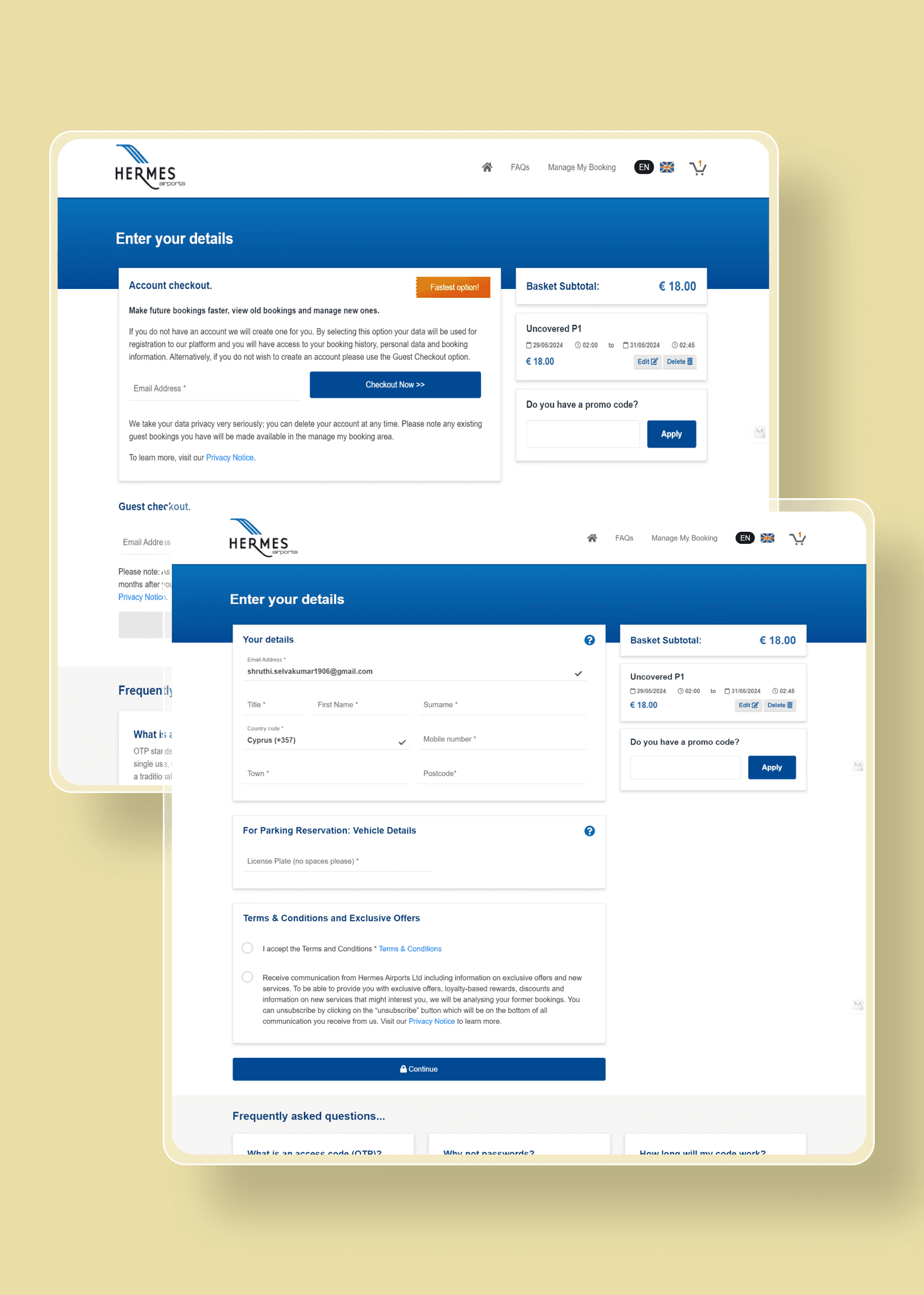
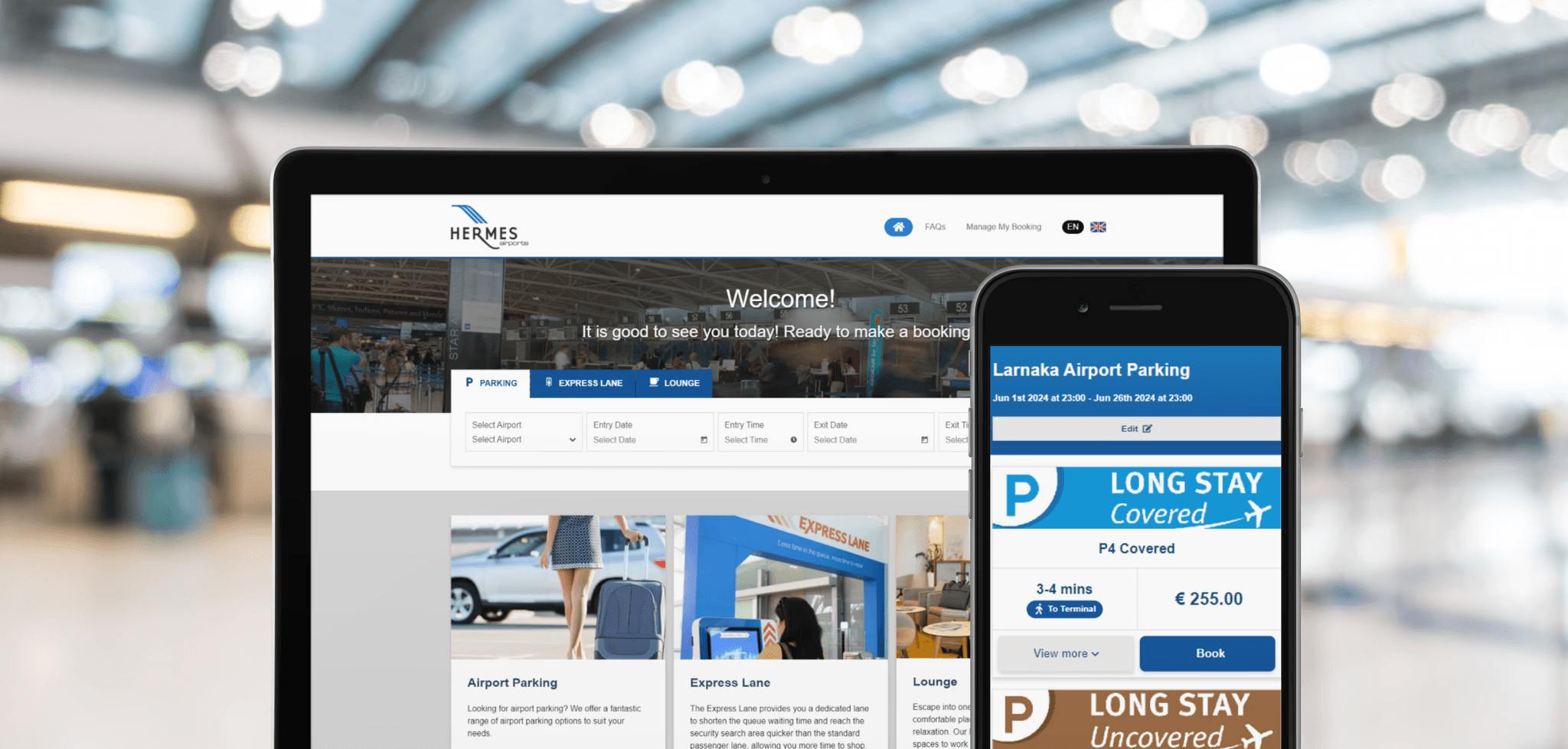
1. The Passenger E-Commerce Interface (B2C):
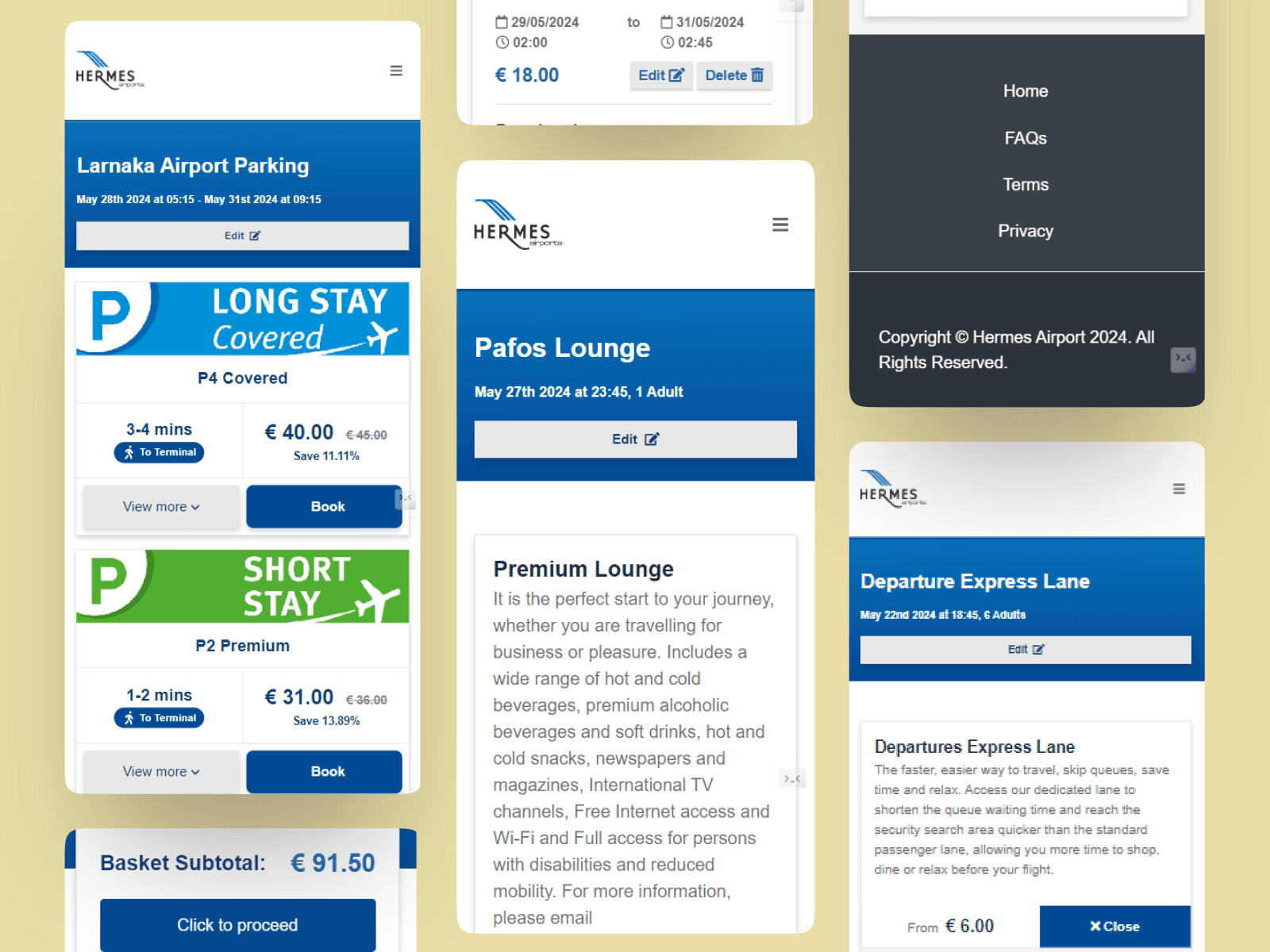
Progressive Disclosure Checkout: Simplified complex booking forms into logical, bite-sized steps, drastically reducing interaction costs and optimizing the funnel for mobile users.
Smart Bundling UI: Integrated subtle, contextual upselling components that felt like helpful recommendations rather than aggressive sales tactics.
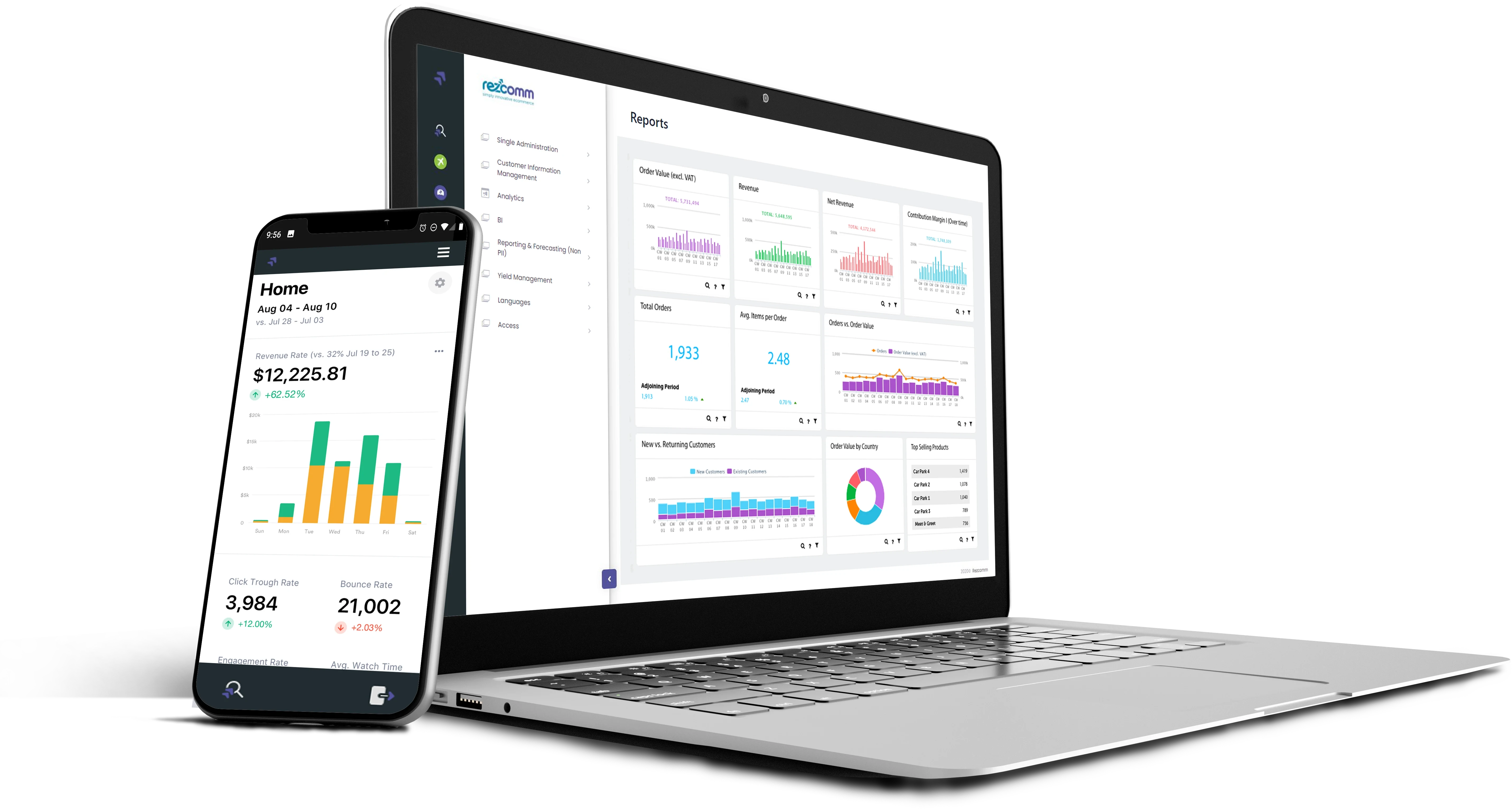
2. The Business Intelligence SaaS Dashboard (B2B):
I contributed to the UX of the internal BI dashboards, translating dense capacity and revenue data into flexible, digestible data visualizations.
Airport staff can now monitor live passenger flow, adjust pricing dynamically, and make data-driven decisions using a single source of truth.
06
Feedback Loops & Collaboration
A successful SaaS product requires rigorous validation. I established a continuous feedback loop integrating both user testing and stakeholder alignment.
Usability Testing: We conducted weekly unmoderated testing sessions using mid-fidelity prototypes. Early tests revealed that users were confused by the technical jargon used for different parking zones.
Iterative Refinement: Based on this feedback, we iterated the copy and UI, introducing a visual map interface with clear "walking times to terminal" indicators.
Stakeholder Reviews: Facilitated bi-weekly design reviews with Hermes' commercial teams, ensuring the evolving designs consistently met their dynamic pricing and capacity management requirements.
"Our partnership with Rezcomm has been transformative... Their platform has enabled us to unlock new revenue streams, optimize our resources, and better serve our growing passenger base."
— Angelina Karsa, Business Intelligence Analyst for Hermes Airports
Business Impact & ROI of Design
By bridging user-centric design with powerful SaaS capabilities, this project set a new standard for digital aviation platforms and proved the direct ROI of strategic UX.
Measurable Success Metrics:
📈 68% Increase in Ancillary Revenue: Directly attributed to the unified checkout flow and the strategic introduction of the Smart Bundling UI components.
🚀 3X Boost in User Engagement: Achieved through the frictionless, mobile-first design and personalized CRM marketing touchpoints.
⏳ Accelerated Task Completion: The streamlined architecture reduced average booking time by over 40%, directly lowering cart abandonment rates.
📊 Operational Optimization: The B2B dashboard empowered Hermes to manage their 12.2 million annual passengers with precise, real-time data visibility.
Conclusion
The Hermes Airports digital transformation demonstrates that enterprise e-commerce is not just about digitizing transactions—it’s about architecting an end-to-end, stress-free travel experience. By rigorously applying service design methodologies, establishing tight engineering collaboration, and letting user research drive business decisions, we successfully transformed a fragmented digital presence into a highly profitable, scalable, user-centric ecosystem.
DISCOVER MORE